The dialogue tables changing minds in Kaduna South
In a rented hall behind a Sabon Tasha primary school, sixteen neighbours are learning how to talk to each other again.
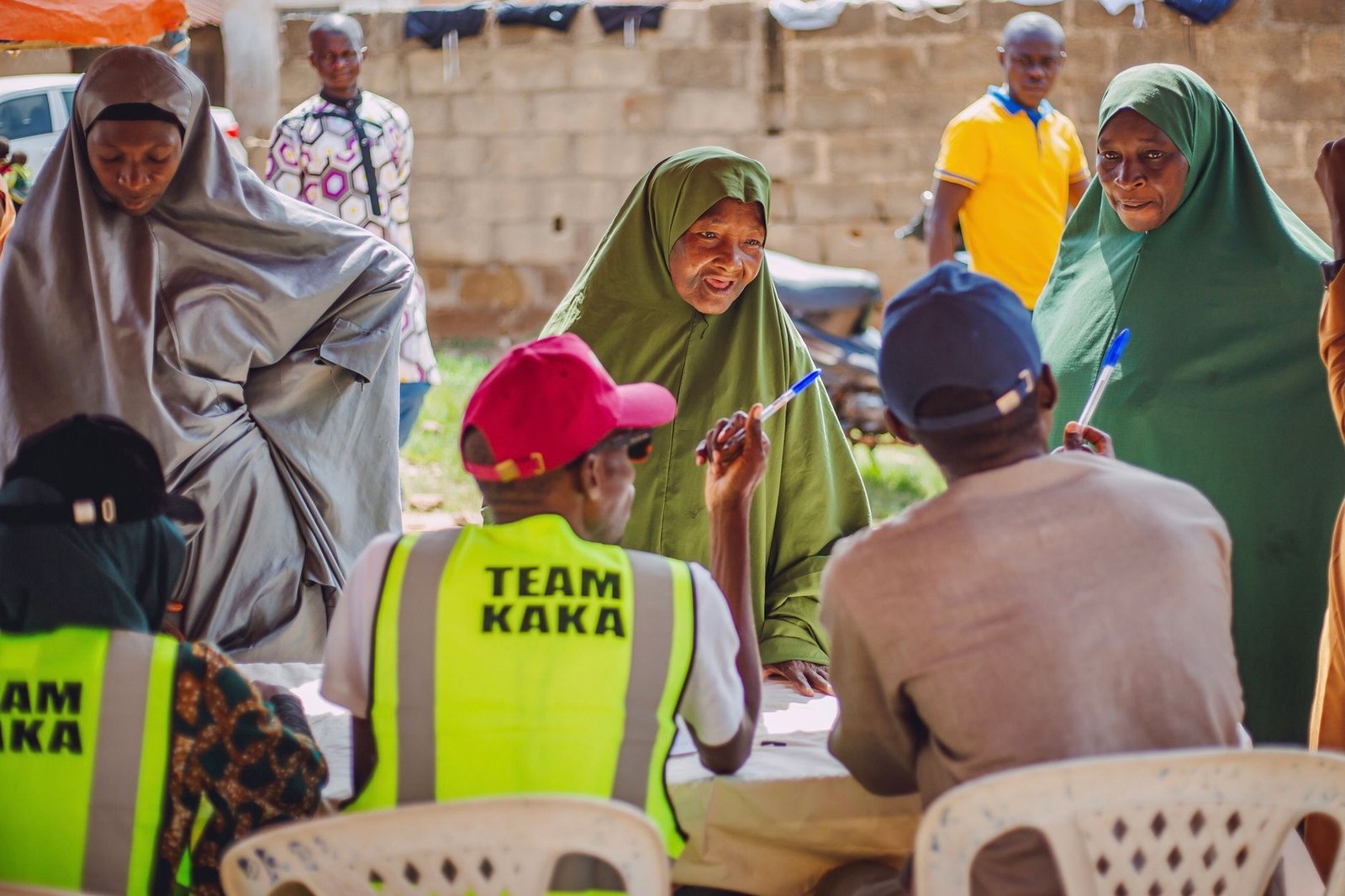
At six in the evening in Sabon Tasha, the light turns copper and the traders begin folding their tarpaulins. Half a mile from the main road, in a rented hall behind the community primary school, sixteen people are pulling plastic chairs into a circle. Eight of them live in the mostly Christian side of town. Eight live on the mostly Muslim side. A few of them have not spoken to anyone from the other neighbourhood in more than five years.
This is the eleventh session of HAPEI’s Kaduna South Neighbours Dialogue, a program run in partnership with two local mosques, one Anglican church and the state’s Peace Commission. It started in January. The premise is deliberately simple: no agenda beyond the fact that these people share a postcode, and a facilitator whose job is to keep the room safe long enough for the harder questions to surface.
How it started
The catalyst was a market fire in December 2024 that destroyed forty-three stalls, most of them belonging to widows and single mothers. The rumours that followed were more dangerous than the fire itself. A community trader named Grace Emmanuel, who had lost her own stall in the blaze, went to see the imam at the main mosque three streets away. She did not want money. She wanted him to help her stop the rumours.
Six months later, sitting in a circle with her neighbours, Grace tells us she still does not fully trust everyone in the room. That is not the point. The point is that when a rumour starts now, there are sixteen people who can pick up a phone and check.
What actually happens in a session
There is a curriculum, technically. HAPEI’s facilitators, all of them from Kaduna themselves, have run through mediation training that draws on both restorative practice and Islamic and Christian traditions of reconciliation. But most of what happens in the room is not on the curriculum. Most of it is listening.
One session, back in April, spent almost two hours on the question of who is responsible for the drainage that floods both sides of Sabon Tasha every rainy season. Nobody solved anything. But four people who had never spoken to each other exchanged phone numbers, and by June a joint clean-up had been organised. It is not a peace treaty. It is a WhatsApp group and a shared spade. That is often what peace looks like at ground level.
What comes next
The Kaduna South Neighbours Dialogue is one of eleven sites HAPEI runs across northern and middle-belt Nigeria. Three more will open before the end of the year, with local partners in Plateau, Bauchi and Nasarawa states. Grace Emmanuel is training to be a facilitator. She says she wants to be in the room next time.
Edited by Sadiq Bello.
This piece connects to Community Dialogue Initiative.
The Community Dialogue Initiative operates in eleven sites across northern and middle-belt Nigeria. Local facilitators are trained in mediation grounded in both restorative practice and faith-rooted reconciliation traditions.